Enlightenment

A flame, once lit, illuminates a room that was previously dark.
Now that I can see, I can find my way around the room. I can move around without constantly bumping into tables or benches. Once I've got my bearings, I can start to get to know the things that are in the room and then use them as I wish.
If I was blind before, I can now see.
Ask, search, find
It's like searching for a lost key. There is one question: „Where is the key?” I wander through the apartment and search. I know the key must be somewhere. For each of us, the question may be different. „Who am I?”, „What is the meaning of life?”, „What should I do?”, „Where is the key?”

For Siddharta Gautama, the later Buddha, the question was: „How can I alleviate or even end my own suffering and the suffering of all beings?”. He searched and wandered for many years. At the age of 35, he was - according to legend - sitting under a tree by a river when he came to the answer to his life question . It is said to have been the first full moon night in April/May, in India in 528 BC near the place Uruvela (Bodhgaya).
We will never know what it was really like: The earliest written accounts date from the first century BCE - several hundred years after the Buddha's lifetime. The time of Siddharta Gautama's search and the night of the awakening are described in the Pali canon in the section of the »Middle Collection« (Majjhima Nikaja, there MN 26 and MN 36).
„This is the suffering” I understood according to the truth. „This is the development of suffering” I understood according to the truth. „This is the suffering resolution” I understood according to the truth. „This is the path leading to the cessation of suffering” I understood according to the truth. „The suffering life no longer exists for me!”
With these words, he outlined the Four Noble Truths that form the core of his realization and liberation. From that moment on, he called himself Buddha (the Awakened One); and for him personally, the search for healing from suffering was - for the time being - over. For his teaching, realization was only the beginning.
Turn over every stone and dig deep
Question, search and perseverance relate to each other like flints that strike sparks in their friction. Master Dogen calls this inner orientation „Bodaishin”, the Buddha-seeking mind. This spirit of questioning, searching and perseverance is the prerequisite for the spark to light up. In Zen, there are different words for the moment of lighting up: Kensho, Satori and Dai Kensho.

All three terms refer to a glimpse into one's own „true nature«. This term sounds so mysterious and is therefore confusing. It describes a pleasantly joyful but also exciting experience that many of us had as children: in the middle of playing, the world comes to us and we know without a doubt: „I am the world and the world is me...” - For a moment, we become one with all phenomena: People, animals, plants, with the water, with mountains, rocks, stones, pebbles, sand and dust. An ancient memory, older than ourselves, has revealed itself effortlessly.
Siddharta Gautama himself had such a childhood memory. Back then, when his father was plowing the field, Siddharta had been sitting in the shade of a rose apple tree. Suddenly, he plunged into a state without any tension or disturbance: This „absorption” plunged him into rapture and bliss, so (MN 36) - and the awareness came to him: „This is the path to knowledge”.
Kensho, Satori and Dai Kensho were bestowed upon him on his path, minor insights, flashes of realization and ultimately a great awakening that would give direction to his life: he became an unsurpassable teacher in guiding others to awakening - and to the realization of an awakened life.
Waymarks to the summit
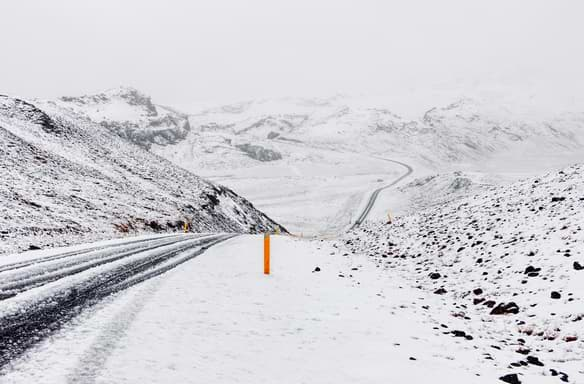
In a rough and foggy terrain, Kensho and Satori are waymarks. Kensho and Satori flash up as a sudden idea: „Oh, I remember where I put the key...” and I guess where I'm directing my next steps. I haven't arrived yet - and the memory will fade.
Kensho appears in contact: My toe bumps against a table leg; I hear the splash of a frog in the pond; an old woman hands me a rice cake...
Satori appears more in zazen; as a cloud that dissipates: for a moment, the landscape and the path are clear before your eyes.
It can take many milestones to reach the summit, but there are usually only a Cross on the summit.
Dai Kensho (or Great Satori) - lasting realization - is the location of the summit cross. I know with certainty that I have arrived. I have found the key and can use it to open the door.
The descent begins with enlightenment
However, experience and history show that this is where the work begins. The summit is hostile to life; persisting in the absolute leads to suffering. Any clinging to - or persistence in - a certain state is difficult to bear, is (e.g: SN 56.11). Dukkha is described as a wheel that is stuck in its axle. The chariot is useless.

That's why I have to descend from the summit again - that will be the called.
Descending from the summit and returning to the valleys and marketplaces is the beginning of Buddhism.
It is the manifestation and realization of the enlightened life: after I have used the key, I put it back in its right place. It is always available to me as soon as I need it.
This free action is called „Sukha“: A wheel that can move freely on its axis. The chariot can drive.

Master Dogen calls this infinite spiral from dukkha to sukha and back the study of the self:
„Studying Buddhism means studying the self.
To study the self is to forget the self.
To forget the self is to be enlightened by the ten thousand things (dharmas).“
For many ages, all the Buddhas and patriarchs have entrusted themselves to this map. For each of us, this trust opens up our own treasury of its own accord, and we will be able to use its contents as we wish.